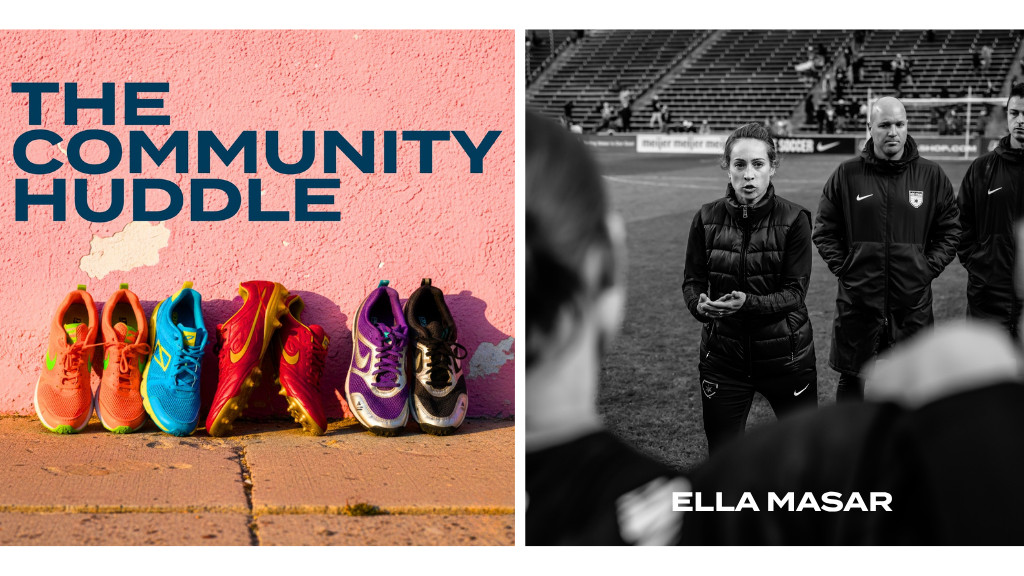
Louise Arseneault - A Non-Linear Journey in Pro Women's Soccer
Louise Arsenault's journey in pro women's soccer has taken her across the world, playing for and coaching teams in Europe, Canada and the USA. This episode of the SportsShare Community Huddle dives into her journey as a pro in women's soccer.
.jpg)
What makes a good brand book?
Sed viverra ipsum nunc aliquet bibendum enim facilisis gravida. Diam phasellus vestibulum lorem sed risus ultricies. Magna sit amet purus gravida quis blandit. Arcu cursus vitae congue mauris. Nunc mattis enim ut tellus elementum sagittis vitae et leo. Semper risus in hendrerit gravida rutrum quisque non. At urna condimentum mattis pellentesque id nibh tortor. A erat nam at lectus urna duis convallis convallis tellus. Sit amet mauris commodo quis imperdiet massa. Vitae congue eu consequat ac felis.
- Lorem ipsum dolor sit amet consectetur hendrerit gravida rutrum.
- A erat nam at lectus urna duis convallis convallis tellus.
- Arcu cursus vitae congue mauris mattis enim ut tellus elementum sagittis vitae et leo.
- Magna sit amet purus gravida quis blandit cursus congue mauris mattis enim.
How to create a good brand book?
Vestibulum lorem sed risus ultricies. Magna sit amet purus gravida quis blandit. Arcu cursus vitae congue mauris. Nunc mattis enim ut tellus elementum sagittis vitae et leo. Semper risus in hendrerit gravida rutrum quisque non.

Important elements of a good design brand book
Eget aliquet nibh praesent tristique magna sit amet purus. Consequat id porta nibh venenatis cras sed felis. Nisl rhoncus mattis rhoncus urna neque viverra justo nec. Habitant morbi tristique senectus et netus et malesuada fames ac. Et tortor consequat id porta nibh venenatis cras sed felis. Fringilla est ullamcorper eget nulla facilisi. Mi sit amet mauris commodo quis. Eget arcu dictum varius duis at consectetur lorem.Venenatis cras sed felis eget velit
- Magna eget est lorem ipsum dolor.
- Enim lobortis scelerisque fermentum dui. Fringilla ut morbi tincidunt augue.
- Nascetur ridiculus mus mauris vitae.
- Egestas sed tempus urna et pharetra pharetra massa massa ultricies.
What brand book references can I use?
Mattis molestie a iaculis at. Volutpat est velit egestas dui id. Suspendisse potenti nullam ac tortor vitae purus faucibus. Aliquet nibh praesent tristique magna sit amet purus gravida. Volutpat blandit aliquam etiam erat velit scelerisque in dictum. Potenti nullam ac tortor vitae purus faucibus ornare suspendisse sed. Aliquet bibendum enim facilisis gravida neque convallis. Malesuada nunc vel risus commodo viverra maecenas. Varius sit amet mattis vulputate enim.
“Arcu cursus vitae congue mauris mattis enim ut tellus elementum sagittis vitae et leo nullam ac tortor”
A brand book can always keep evolving
Egestas quis feugiat urna, tincidunt ut sem sit in ipsum ullamcorper etiam varius turpis tincidunt potenti amet id vel, massa purus arcu lectus scelerisque quisque velit cursus et tortor vel viverra iaculis ornare feugiat ut cursus feugiat est massa, blandit quam vulputate facilisis arcu neque volutpat libero sollicitudin sed ac cursus nulla in dui imperdiet eu non massa pretium at pulvinar tortor sollicitudin et convallis senectus turpis massa bibendum ornare commodo eu scelerisque tristique justo porttitor elit morbi scelerisque facilisis
SportsShare Community Huddle - Louise Arseneault
Watch the full episode on SportsShare.
Check out Louise's Community Channel on SportsShare today!
Not a member yet? Sign up today for FREE!
Transcript
Ty Summach: If you wanna understand the guests joining us today, have to look at a backyard in New Brunswick During a Canadian winter, while most people were staying inside, Lou out there shoveling frozen sand from a cement factory into a makeshift sandbox. Just so she had a place to trade find a way mentality, took her across 37 different countries. As a professional athlete, is the first Canadian to ever play professional beach soccer, and one of the rare few to have played at the pro level in all three facets of the game, grass, beach, and court. Today, she's an author, a former technical director, and is currently playing in the Spanish Premier League. But more importantly, she's here to talk about the unseen work. She defines a champion. Lou Arsenault, welcome to the Sports Share Community Huddle. A ton [00:01:00] to dive into, but I think the most appropriate place is to start at the, the very beginning. So I'll start with this. Before you were the first Canadian to play professional beach soccer, which probably wasn't, you know, had in your mind at the very beginning. You know, you were a kid in New Brunswick, and I just wanna know, you know, what was the first memory of a ball at your feet and did you have any clue that would eventually lead to all of this?
Lou: I mean, short answer, no, I had no clue that it was ever gonna lead to any of this. Youngest memory I have, I think I wanna say that I was like five years old playing roughly in like some dirt patch somewhere. I remember like when I asked my mom that question, I was like, she, she told me that we had a lot of energy and she wanted to put me in soccer and didn't know whether to put me in soccer or hockey.
And at the beginning, soccer is way cheaper. So, and I like to run, so she just put me out there and was like, run, run, run. And I [00:02:00] ran, I ran, I ran, and I'm still doing it. Now
Ty Summach: Was your mom the first person in your life to kind of give you that green light to, to play soccer? Did you grow up in a, in a soccer playing family? You mentioned running, but just kind of what, what pushed you into that as far as the direction
Lou: My, both my parents were always super, super supportive. Growing up, they, neither of them had ever played soccer. My dad played hockey, but nothing super competitive. My mom played broom ball when she was growing up, nothing super competitive.
So, but for me, I mean running, but I was fast. So people would say, gimme the ball, and I would run in behind and score some goals. So when I was little, and then evidently, as I kept like playing the sport and as I kept developing obviously skills and that kind of thing, my parents like figured out that I had a knack for it.
And because I was super determined and had like some grit, it just progressed through and through and through. And I fell in love with it at a young age. So then I didn't wanna stop. I played high school and played camps and I got to play for the provincial team. And then those were the next goals that kind of like build these pillars.
But my [00:03:00] parents were, both of them were, were super, super supportive in terms of like bringing us to practice, driving us to, wherever we had to go for practices they never really play the sport, but they played through me.
Ty Summach: Do you think that was a benefit? I mean, your parents, like, did they, did they push you in and, and you just fall in love with the game? Was there any pressure on you to think about professional sports or did that come on naturally? I, I want that perspective like from, from your parents, 'cause that's such important element to how kids experience their journey in sports.
So maybe just tell me a little bit more , your parents' perspective. And I think sometimes it is healthy when they haven't played the game themselves at a high level. So maybe just tell me more about that.
Lou: They never pushed me or they never thought, so to speak, that I could make somewhat of a career out of it and even end up coaching or that was never within their cards for them. I remember throughout my career, my mom would tell me like, we'll do as much for you as you do for yourself in terms of, are you willing to [00:04:00] work hard at practice?
Are you willing to do the things? And then it's a joy for us to be able to bring you to these places if you're willing and wanting it. But they weren't the driving pillar behind my love of the game. I fell in love with it. I felt that from a young age I had some successes early, which kind of motivated me to continue and wanna continue to grow.
And, through their support and through evidently some of the coaches and, and things of that nature, I was able to, to kind of move throughout the ranks. But they never put pressure like I see some of the kids now and the pressure that their parents put on them.
My parents were in a way, super supportive and they, I don't know that they fully understood the magnitude of what the possibilities of the sport could be for somebody like me. So I was a main driver and they, they were super supportive
Ty Summach: Yeah, I can tell
Lou: Yeah.
Ty Summach: And most parents would say, it's too cold. Get inside. Like, I think that is, is a natural thing to be, but for the grassroots parents that are listening, is that level of drive that you [00:05:00] had something that you think you were born with, is it something that, we can help as parents stir up in kids? did that come from?
Lou: Well, I think we need to talk about intrinsic and extrinsic motivation, right? So I think that there are things that, extrinsically were motivating to me. And I think a part of it also was also intrinsically motivating for myself. Now can we teach that intrinsic motivation? I think so, because everybody has that factor of what gets 'em going.
And the extrinsic also in terms of support. But before we dive a little bit into that, I remember like telling my mom and dad like, Hey, can you guys like come, can you toss the ball so I can like learn to like, not learn but receive and pass it back to you?
And my mom was like, I thought I stopped playing fetch with you a long time ago because here I am like, 27, 28, 29. Mom was like, we're back doing this. And the funny thing with that is that she would stand still and like obviously with all her, like snowsuit, all that stuff, she would stand still and top the ball.
And she's like, if the ball goes outside at my hand range, she's like, I'm not going to get it. [00:06:00] So like if like I were to like make a mistake of something and it would go like over her head or where she, she didn't really would try that hard, let me tell you. And then I would have to get outta the. Get out the sandbox and like, go get it myself and then come back.
But, to go back to what you asked, I don't know if you said, if I was born with it, I, I mean, I look back and a part of me is like, yes, but I don't know that it wasn't necess, I think it was cultivated like through just the desire of interesting motivation and my, my family's support, which would also then be extrinsic motivation coaches and that kind of thing.
So for the parents that are listening, I think there is a way to cultivate that and a way to like positively impact children of the, of wanting to continue to pursue what they're, they're yearning for. But definitely not leaving, my parents never left me off the hook. Like if I said I was gonna do something and commit to something.
My parents were like, sorry, you don't feel like gonna practice like you're going anyway. Like you committed to this. And, and that was a thing where early on I learned that what commitment meant. I [00:07:00] learned what discipline meant. I learned what all these things meant. And then I continued upholding that, knowing that, I didn't have any reason to fall back.
Like I didn't have any grounds to fall back on because my parents were like, Nope, you're going.
Ty Summach: A lot of the work you do is supporting parents and helping them kind of guide through it. Is there any just examples of that around guiding children and young athletes that you see? These are some of the things that work in trying to accomplish that, and these are the, some of the examples that
Lou: So I'll have to point out that the landscape of sports have changed tremendously over, I mean, the span of like my career and, and when I grew up versus. When I'm as a director of coaching, what I've seen from parents, that landscape has changed a lot because a lot of parents, I feel like, with the best intention in mind, of course, sometimes are reliving their youth through their children.
So there's, there's added pressure, on the kids. Like I've never have, I ever, until I was working in [00:08:00] California, seeing so many parents sit and watch soccer practice, like my, I don't, I don't really recall my parents sitting and watching, like practice was a time for me to explore and to learn and to do the things that I had to do.
They came and supported games, but having parents sit on the sideline and watch, sometimes it creates, depending, sometimes it creates like a, a sense of pressure for the kid where it's an environment where they're meant to fail. It's a safe space where they're learning. Failure is feedback, but I've also heard parents say, this is an example of what you shouldn't do.
Scold the kids after practice because they failed at practic. And, and I'm like, if, if they're meant, if they're not meant to fail at practice, where are they allowed to fail? And then if that's the pressure that we're putting on, then becomes something that we discuss a lot into some of the, the presentations that I do.
Kids are wanting to be perfect and, and if they don't get that, that perfect game, perfect practice, then they attach that outcome with their internal validity. I'm not good enough. I'm not this. So it's this kind of [00:09:00] like cycle, right? Where, and that's just one of little facets where I've seen an impact on kids.
I'm not saying it's all parents by any means, but these are, these are points that I've noticed along my career that I'm like, Hmm, we need to consider this or reconsider this pending the parent, pending their parenting style and that kind of thing.
It's the drive home from games, right? A lot of times, like kids know that they've made mistakes. They know if they've won the game, they know if they performed well, they know. But the scolding that 15 minutes ride the scolding from this. And if my goodness, if the game is two hours away, then you're in for a lecture.
And that's a lot of the feedback that I've gotten. And a lot of the things that I've seen from kids are they dread that drive home where in reality it should be a space where if the kids want to talk about it, then they can not having to be like, I don't wanna hear about mommy and dad. They're gonna, I already know I didn't play well.
So those are some of the things that like stick out that probably should avoid, are there ways that we can, we could do a little bit better? And then on the flip side, things that I do see that I think are super [00:10:00] healthy is that. Parents come and they support, they don't, they don't, ah, if my kid is doing a mistake or they're, they're like, oh yeah, that's my boy because they've done one thing.
Well, or the, the excitement in which that the, the parents are, are present at the game is good, but they themselves can't let themselves be defined by the mistakes or the successes of the child. And that's what's difficult because a lot of times kids will look for feedback for their parents, and you want the parents to be like, you're doing great.
Another good thing that parents will do though, I've seen like a lot of good parent behavior is that they're involved, but they let the kids drive. So, I mean, not to the point where I'm like, oh, I don't wanna be come to practice.
Sure you're not, you don't have to go. That's not what I'm saying. But it's saying, if you're made this commitment, we're doing this, but you're driving it. You wanna work hard, work hard. If you're not earning, playing time, why is that? Talk to your coach, right? Like, so they become that voice of reason that creates independence in the child.
And then the kid decides like, do I really want [00:11:00] this? Or is it something that I wanna do recreationally and or is it something that I wanna do more competitively? And all these avenues and all these, these answers are not wrong. There's, there's different pathways and there's a spot to play for every kid that wants to play.
But at least from an earlier stage, they're getting to, to make decision and understanding the repercussion of their choices. Because as we know, in the real world and in the adult world, every, every action or every choice that we made has some sort of repercussion of a cost. Good or bad doesn't matter.
Ty Summach: To shift to your professional career, but before we get there, you mentioned something that sticks out, which is, letting the child, letting the young athlete kind of like drive their experience. Can you just tell me
Lou: Mm-hmm.
Ty Summach: there's any moment that sticks out where. You had that aha moment where it's like, I love this and this is what I want to do. This is what I wanna commit myself. Like, can you tell me about moment? Was it a singular moment or did it just evolve? But just tell me what that felt like. [00:12:00] If, if you can recall that.
Lou: I don't know that it was, for me, a, a distinct moment. I think it was accumulation of moments that that made, that gave me feedback, letting me know that I was on my right path. I felt like I, I did things when I was younger because, 'cause I wanted to surpass, I wanted to be the best version that I could be.
I remember, like my parents, my mom used to work early, and I would have her drop me off at school earlier than normal. And then I, I had gotten permission to use the gym and I would get touches on the wall, right? 45 minutes of touches, an hour of touches on the wall. So that way, like I was, before school even started, I had an hour in.
So I remember doing those things because I felt like there are things that I could develop on my own that I could use on the field that would make either my teammates, my team successful, but also like I wanted to be the best version that I could be. [00:13:00] So I remember these little moments.
Like, I remember running, I remember like taking my ball out for a walk. So, or run. So I would run around my neighborhood with a ball on my feet because if you take a bad touch, then I have to chase it, right? So now you're working on intervals without just having to necessarily run. So little things like that, that I can recall over the course of my career.
You don't do those things if you don't love the sport. So I don't know when I fell in love with it, but I know that at those points that I can recall, I was already in love with it, that I would, I was willing to wake up early to go to school and do the things that I had to do because I wanted to get the outcome that I wanted to have.
Ty Summach: You, you, you touched on just, I mean,
Lou: Hmm.
Ty Summach: just one example of the unseen work. There's so much unseen work that that goes into,
Lou: Sure.
Ty Summach: I, I, I wanna obviously shift to a little bit later on in your career, but, yeah, you told me a, a funny story about this, this travel story heading down for tryouts. It was very unexpected than, than what you did let's go back through that story I
Lou: Sure.
Ty Summach: Want to dive [00:14:00] deeper into, lessons you pulled from that the unseen work, but also expectations versus reality. And so yeah, just let's go through that.
Lou: So, I finished my master's, I mean, I, I finished my, my bachelor's degree and I, I played in teams in the WPSL throughout those summers. So in addition to doing the summer packet, I wanted to play, so I got to play in places like Maine, Michigan, New York, New Jersey.
And then after I graduated, I, I was, while I was doing my master's degree, I wanted to continue playing. So I'm, I'm coaching at the university. I'm, I'm an assistant coach, graduate, graduate assistant, but I still had that itch to play. So I had an old teammate of mine that I played with in college that I was like.
It'd be fun if we could play one more season together. And she was like, I would love that. I'm like, where do you wanna go? She's like, California. I'm like, okay. So then here we go.
I start messaging all the teams in the WPSL or the WE at the time. And out of all the teams that we had, like message, there's [00:15:00] one team that got back to us and they were called the Bay Area Breeze. So I'm like, sweet. And they said, Hey, we have a, we have a tryout, whatever date, et cetera, et cetera.
So we booked our tickets and we're ready, we're ready to go. We're going to these WPSL tryouts. And I remember way over in Houston, like a three, three and a half hour layover in Houston. And my buddy goes, my friend goes, so what's the name of that team again? And first of all, that's how prepared we were. I mean, we were just there to go and to try out, right?
And I told him like the Bay Area breeze. And so she pulls up a computer, she's starting, she's like, what? What the heck? She's like, what? And I'm like, what's the monitor? I'm like, this is, this is a pro team. I'm like, what? She's like this professional team. And I'm like, oh my God. She's like, we can't go.
And I'm like, you're right. We can, we can't go. Like we're not ready for this. Like, we're just graduating from college. And then she's like, we gotta turn back. And I'm like, yeah, we gotta turn back. And I'm like, wait a minute. We wait. We can't turn back. Like we don't have a ticket back. We,
like, these are the things that we have to do. I'm like, how about, how about we just go and see how we measure up [00:16:00] to these players? I was like, at least we know what we need to work on for the next season. And she's like, fine. Like with, yeah. And to add, to add matters to that is that our, our flight arriving into LA we were supposed to arrive into, got delayed and all that.
So we had to drive, we rented a car and we drove overnight to arrive to the tryouts on time. So we drove from LA to San Francisco six hours, and we drove overnight and we arrived at 8:00 AM or 9:00 AM for the try. And I was like, oh my goodness, okay, here we go, buckle in, let's do it. And we went to the tryouts.
And by the time we came back home, I mean the talent was really good. We were super impressed. And like a week goes by, no phone call. And second week goes by, no phone call. Third week come back. And we both got the call, we made the team. And that's when I realized that I had all the physical capabilities of being a professional player, which was my goal in my dream.
But [00:17:00] mentally, if I would've had the choice in that moment, I would've backed away. And then that made me realize how many times are we on the verge or do we have the capabilities or are we capable of achieving or doing the things that we want to do? But mentally we say, I'm not ready. I'm not good enough.
I'm not this, I'm not that. So when I, when I go in schools and I speak, it's often one of the lessons that I teach because again, in that moment. If we would've had a backdoor on the way back, we would've taken it. But we had no choice. Out of ignorance, out of just pure ignorance. And, and that moment helped shape what has now been the rest of my career.
Ty Summach: I wanna go back to one thing you said that a week went by, there was no phone call. A second week, there was no phone call. Can you walk me through just the mental gymnastics. That you went through and how you navigated that.
Lou: Yeah. Well, well, at that point is like we were, we were going to see if we can measure up to them, [00:18:00] right? So we went by No, no phone call. And you're like, well, at least we went, it's one of those things like if a week goes by, there's no problem. Because we, we didn't know how to, we didn't know what to expect. We didn't have any expectations. All we wanted to do was to see if we can measure ourselves up to some of these players that were already deemed professionals, right? And, and a week goes by, nothing happens, but you're like, at least I tried, at least I did this.
At least a week goes by and you're like, well, maybe next year. Like, like, this is what I learned. This is what we need to do this. How do we pivot? What team now do we get? And then the, the third week and like, I think my friend got a phone call first and like I'm celebrating her victory. And then I got the phone call too.
And like now both of us are, like on cloud nine because it was just like a super high. And we're like, wow. Like we, and that's when it realized again, that's like when it really confirmed that we're like, wow.
Ty Summach: Yeah.
Lou: Like we had it in us all along. So, so I'm grateful. I'm super grateful that we decide to move forward and, and [00:19:00] blindly, honestly, in ignorance.
Sometimes they say ignorance is a bliss. Well, that one was a blissful moment.
Ty Summach: Had nothing to lose. So sometimes you walk
is, it kind of sets you free, it keeps you, it keeps you loose, but certainly, if you have all the expectations that you should be there, like that pressure can also be crippling.
when speak to kids, or you speak to adults and you share this, how do you articulate that? Like if you were to, if you were to kinda like, restate that here, like how do you restate that,
Lou: Mm-hmm.
Ty Summach: message, that, that lesson.
Lou: ignorance was bliss, right? I had all the physical capabilities of being what I wanted to become, but mentally is what stopped me. So then I also teach the opposite of that, instead of, if you hear a no, no is not a rejection, but it's a redirection.
So if it, if it's not that, so you're like, okay, so then you have to ask your brain question. Our brains are wired to answer questions. So if I say I'm not good enough, it accepts that it's truth. But if you say, what, what did I learn? What can I do better next time? How is this? This person said no. Well then what can I do?
And [00:20:00] then, it starts thinking, because what I also share with them is that the following year I went to that same tryout
Ty Summach: Hmm.
Lou: and I did not make the team. And that one was a, I was like, you know, because now at first I didn't think I was good enough.
I made the team. And then I had that confidence thinking, yeah, I'm gonna make this team not taking it for granted, but going in saying, I've had a year under my belt. Let me, let me, and I did. I ended up not making the team. So for me, i'm like, do I, what's the response?
And that's what I like to teach kids to. What is the response? When I played it was always, you make a mistake, but what's your response? Like, how quickly can you recover from the mistake? So I decided that even though I was coaching, I would train with the girls. I would, I mean, I was trying to be the best example that I could be as a, as a, an assistant coach.
And worked on my fitness, worked on things that I felt that were weaknesses from the feedback that I've gotten. And after that, my next contract was playing. I mean, I played in another semi-pro team, and then my next full contract was playing professionally in Finland, which [00:21:00] was in Europe, which is what I wanted to do in the first place.
When, my buddy asked me where I wanted to play. So it was just like a, again, for me, it wasn't a rejection, but as a redirection, I'm like, fine. So what can I learn from this? And then where do I wanna focus my energy and what's my response? So when I teach in schools, I give him more of a global, and I give them a little bit more of that information.
But really the big answer is no is not a rejection, it's a redirection. And also share with them, like what happens if somebody says no to you? Does your house catch on fire? No. Like, does something bad happen to your family and friends? No. Does like, so what? Ha Like why are we afraid of nos? Right? Because we internalize them and we think we're failures.
It's the mental side of what we're thinking about when we hear that. So if we shift what that means, then our responses can be quicker and we're able to make a shift and spend our energy instead of ruminating on what could have been. Now we're saying, fine,
Ty Summach: Hmm.
Lou: my response? And where do I wanna spend my energy?
Ty Summach: I mean, you're, you're a published author. [00:22:00] You wrote a novel called The Blackout inspired by the 20 Power Outage.
Lou: That's right.
Ty Summach: also use the
Lou: Mm-hmm.
Ty Summach: as a metaphor for the moments where the lights go out, kind of on your expectations.
And it sounds a little bit like this.
Lou: That's right.
Ty Summach: this is, sounds like a blackout moment. Can you maybe just walk me through potentially another blackout moment in your career? Maybe, maybe it's this, this step to, to playing in Europe where you realize kind of that, your raw talent and and experience previously maybe wasn't enough to get you to that next opportunity and just how you navigated that.
Lou: So to talk a little bit about the book really quick before we dive into the rest that I think it's worth mentioning that I ended up writing that book when I was in Finland. So, and I wanna point out that like the ideas that we make about the things that we think we want sometimes are glorified in our brains.
So what I mean by that is I got a, a [00:23:00] contract, I, I became my own agent, not signed, but I was the one managing my own contract. I, I talked with people on, how, how to be able to do the things that I could do and ended, ended up moving to Finland. But as a pro athlete, you train. But you still have a lot of spare time on your hands.
So then how do you occupy your time? Like you're thinking when I became a pro athlete, you're thinking of, I don't know. In my head it was like the bells and the whistles and like, the, the fans every, I don't know, like when you're a kid, you just have that, image in your head.
But although we had a decent fan base and we had all of that, my point was that I had a lot of spare time on my hands. And, and the finish language is a language that is super, super, super hard to learn. Like the word simple, it said,
Ty Summach: Not simple.
Lou: I remember like when they were doing the call ups for like you starting lineup, they would say whatever, whatever, number 13, which [00:24:00] I knew the sound of those words strung together from experience.
But 13 was. So when I heard that, then I would like say, I know it's me. Right? So it was super, like a hard language. I learned the basics to be able to communicate with my teammates and a lot about social cues and a lot about like, reading the room context practices were mostly in finish with some help and support, but I'm like, what am I gonna do with my spare time?
I've always had aspirations to become an author. I, I wrote little poetry, like a lot of people do when they're kids. And I bought a library card, and I read all the English section of the finished library, which mind you was super slim.
So probably, I don't know, 15, 20 books in English, right? And then I was like, you know what? It's time for me to write my own. So it was a goal, and I think I had set for myself 250 words a day. I would get up, go train, come back, write 250 words, not no judgment, just blah, blah, blah, blah, blah. And from there ended up, I remember [00:25:00] going on bus trips and I'm like, I gotta wrap my face.
So that discipline of saying that commitment, those are the pieces. But to answer your question about like other blackouts in, in my career, I mean, I'll share this one. I think this is a, this is a recent one actually, t so one of my biggest aspirations since I was a kid was always to play for my national team and the Canadian national team.
Well, I played 11 aside. I went to the us. I mean, I never was on the radar. I played for, for my province. I got to play, in the Canada Games, but I never was called up for the national team, which is fine. And then I shifted from 11 aside to playing futsal. So I got to, to play futsal representing the US.
At the time, us didn't have a national team, so. I got to play for US soccer representing the us. I'm like, that's cool. I've heard the national Anthem play of the US almost all my life playing in the us but one of my goals was to wear the Crest, the Canadian press, and to hear the national anthem. Well, last [00:26:00]March, I was in discussion with, Canada Futsal.
So Futsal made a Canadian national team and I had the opportunity to go to the final camp. So I went to the final camp and I don't know what my expectations were, honestly. Like I was humbled to be asked to go. I competed heart. I had a little injury, which didn't really help me in my favor, but there was really, really good talent and I was excited to see that talent in Canada.
And, we wore like our red shirts, the crest, and we played some friendlies. I heard the national anthem, right? So I'm having, I'm like, this is, this is awesome. This is awesome. And then I get the phone call after and, and the coach told me that I did not make the team. Now the way in which he shared that I didn't make the team, his choice of words were not the best.
He was kind, but his choice of words were not the best, which made me think, I'm [00:27:00] like, I'm the age that I am, I've had the experience that I've had, and I'm able to, to, to like take these words and to be able to shift them. But I was also thinking if I was a young athlete, starting out in his choice of words that were said, it could have destroyed somebody's career, right?
So for me it was fighting with those dark, like, am I too old? Am I not good enough? Am I not this, am I not that? So when all that happened, there's like this like internal sort of like. But then I was like, you know what Lou? I'm like, maybe you need to be more specific in your manifesting, because all you wanted all your life was to play for the national anthem, to hear the national anthem and wear the crest.
And here I was. It's kinda like the universe was saying, you know what? You got to play you the national anthem now. Keep going girl. And I was like, I'm okay with that. And, and it was one of those like blackout moments from the thought in, in our, the spiral. Even though like I do a lot of the mental work, even though I do a lot of like reading and all of that, I still was able to, to have those thoughts.
Right. [00:28:00] But it was interesting to be, to be a, to kinda like listen in on those fears. It was interesting to just notice them, right? The things that you start creeping up, like, like I mentioned, are you too old? Are you not good enough, are you? And I had to stop myself and.
Look at the career you've had so far. This doesn't define you as a player, right? So I had to have a conversation with myself in those moments. And I'm sharing that with you because I think that there's a lot of potential value there in the people that are listening, because sometimes what you're wanting for yourself doesn't always end up the way that you're wanting it to pan out.
But there's always lessons to be learned. Like I've made friendships on that camp that, are, are some that, like, are I still hold near and dear to my heart? And I was able to cheer them on when they went to the concacaf and they won the tournament. They ended up going to the World Cup, like they made history as Canada.
And if I sat bitter then that means I've not grown enough in my development and my personal opinion. But I sat prideful and saying, [00:29:00] heck, I was top, top whatever, top 17, top 20 in Canada at the time. And I got to compete with some of these players and I know them by name and now I'm cheering them on by name.
Right from the other side of the camera. But I think that's one of those lessons for me that was just recent and it's more fresh, which I think is why I, I chose to, to kinda share it.
Ty Summach: Even though it was a no right now, is it still a goal? Is it still a goal?
Lou: yeah, it, I mean, yes and no, but my, my brain's like shifted. I'm like, what if Canada comes up with a beach soccer national team? I'm like, maybe, like, the goal's not never dead, the goal's not dead. But from what I wanted from a young age in a way, I was able, I took, took, I don't know, 30 years to get there.
But in a way I was able to get it and that part of me satisfied, I'm happy. Now does that mean it's the end, end goal? No. Do I, do I wanna represent my country? Always. But if, if hypothetically Canada had a national team for, for. For each soccer. Maybe that'll be [00:30:00] my second shot. I'm not guaranteeing I would make the team, but maybe you never know, right?
Ty Summach: Just going back to one thing you said, you mentioned around kind of beginning to write this book that you'd set a goal.
Lou: Yeah.
Ty Summach: and that would come after my training. So it sounds like there was a bit of a, a structure and a regiment. Like, can you maybe just tell me a little bit more around how like, important goal setting and structure and discipline is to accomplishing goals or,
Lou: Mm-hmm.
Ty Summach: just pursuing dreams, whether they, they work out or not and they turn into a different lesson. But just how important has that been for
Lou: Yeah,
Ty Summach: like structure and goal setting is important.
Lou: it's been crucial, honestly, for, I think a lot of kids nowadays will say, I lack confidence. I've learned earlier on that when you decide to commit to yourself and you become disciplined, it builds the foundation for confidence. So you're not looking outward for that [00:31:00] confident feedback. You're growing something on the inside.
Doesn't mean that you're gonna be super confident all the time and every given moment. No, but at least you have a solid foundation to fall back on. And for me, like they call 'em habits, systems, they call 'em routines, whatever you want to, but the discipline act of committing to yourself and saying, I'm gonna do this.
This is what I'm doing, and, and to do it day in and day out, even though you don't really feel like it has been, I think a, a, a propeller to achieving some of my goals because I'm not letting myself off the hook because. People on the outside, unless you have a really good coach, a really good mentor, somebody that's like pretty disciplined themselves.
A lot of people tend to leave people off the hook. I don't wanna do, I don't feel like, ah, it's okay. Don't do, you'll do. And, and it seems harmless when it's done, once in a while. But if it becomes a habit itself, then you [00:32:00]realize you're, you're a year, two, year, months down the line or whatever it may be, and you've not gotten to where you want to go.
And sometimes, like I told you, the goal is the goal, but the journey, you have an idea where the journey is gonna look like.
Ty Summach: Hmm.
Lou: that's not always the real journey. It, it might take twists and turns and you're gonna end up somewhere sometimes where you thought, this is not what I imagined myself ending up.
And sometimes you end up somewhere better or you end up where you need it to be in that moment. So for me, it was a crucial lesson. I don't know where I learned it. I mean, I've, I've always listened to. Mentors, authors. Like I said earlier, I really liked reading. And I know that it was something that at some point I caught in a book or a coach taught me, or just through my upbringing.
But I know that if you remain disciplined and you remain organized and, and your goal, like in wanting to achieve your goal, you have to make sure that you, you make a commitment to yourself and, and if you can't commit to your own self, which that voice is always with you anyways, then how are you gonna lean or what are you gonna [00:33:00] fall back on when you're in your most moments of fear and doubt?
And that voice can't say to you, no, remember you worked so hard all these months. You got this instead. Sometimes that voice says you should have worked hard instead of, you know what I mean? And then that, that doesn't comfort you when you're in moments of stress or moments of of doubt. So I'm not saying it's always black and white like that, but for me it's helped me in those moments of, of really.
Trying to commit to myself, and when I say that I do something, having the integrity of of, of doing the things I said I was gonna do has helped me get to where I am and has also helped me fall back on, on, on myself, on the foundation that I've built, because I chose not to let myself off the hook.
Ty Summach: I am a lover of books. I find that books in my life have, that's where a huge majority of my mentors. [00:34:00] Have come from.
Lou: Mm-hmm.
Ty Summach: I know you're a lover of books, so shifting a little bit more to, to anyone that might be listening, say for example, as a, a youth coach who might be frustrated, might be confused, what if you could gift one book to that individual who, who's navigating kind of the, the young lives of, of youth athletes, and hopefully change their perspective.
What do you think that would be?
Lou: It is not an easy,
Ty Summach: No.
Lou: Here's the deal. I, I've bought a lot of books to gift to people because something I like because I see a lot of values in books. But I have a solid five, that four or five that I select from, depending on the person I'm talking to. So I do think that there's three or four of those books that I, I do firmly that every single person should read them.
Okay. But depending if I'm talking to you right now and depending on your [00:35:00] conversation, I might say he might need this book now more than the this one. So I will share, I'm not as specific as just one, but I will share a few that I think are very, very valuable. For you describe like a coach that, that was growing up in the youth and or coaching the youth and trying to inspire the youth.
One of those books would be one, the Slight Edge by Jeff Olson. I don't know if you've ever read it. If you haven't, you should. Great. Perfect. The second one is called The Saint, the Surfer
Ty Summach: Hmm.
Lou: the CEO.
Ty Summach: heard of this. Yes.
Lou: Great book. Great. Great book. By Robin Sharma, who has become one of my favorite authors.
The third one that I would also gift would be the leader who had no title. Again, A book by Robin Sharma. And then if the coach was looking for also guidance for his players, there's one that I read that I felt like is very [00:36:00] impactful by an author called Michelle Poer, and it's called Hello Fears. And it, I mean, it, I think it's a good read for anybody, but I also think it's good read for, somebody that is, 13, 14, 15, 16, 17.
The book is super bright and has colors, but it has really, really good content in that, and I think that it brings a lot of value. So that was four. I said three. I lied. Gave you four?
Ty Summach: list. one thing that you
Lou: Yeah.
Ty Summach: so you focus a lot in your mentorship around leaving an impression of increase. So can a volunteer coach who only has 60 minutes a week to work with a young athlete, make sure that they leave impression long after that that session ends?
That game ends maybe after the season ends.
Lou: I would say two things. First show the kids that they truly care, because a lot of the times kids come to practice and they're dealing with the stressors of school, home, whatever. We don't know all the things that the kids are dealing with, [00:37:00] but knowing that they, they really care is a, is a massive one.
And the other one is that we have the tendency to believe that fun and hard work are antagonistic, but I believe that they're married. So I think it's, it's important to, to incorporate fun and things that are difficult. So instead of the monotonous, boring drills that we've all been through, or whatever it may be, creating an environment where they can still work hard, the intensity is super hard.
It can be enjoyable at the same time. Now kids are having fun. They know that they're working hard, and when they know that they're working hard and having fun at the same time, they walk away fulfilled in knowing that the coach cares. So I think that that would be two main ones, for coaches that are listening, for sure.
Ty Summach: To kind of the technical directors that are, that
Lou: Yeah.
Ty Summach: So, I mean, you've, sat in the big chair as a technical director, for a women's club.
Lou: Mm-hmm.
Ty Summach: Okay.
Lou: Yeah. It was in Livermore, California.
Ty Summach: You're playing in the south of [00:38:00] Spain. You know, you're seeing it from the Spanish level.
You've obviously played all over Europe, you mentioned Finland. Is there anything, and just in terms of how you see clubs in Europe across the pond, that wish you could share with some of the, technical directors and administrators that are running clubs over here and potentially even how they're forming community around sport. there anything that, that you think is important
Lou: Mm-hmm.
Ty Summach: that might be, might be missed over here in North America?
Lou: I mean, I think that the, the sport in Europe and North America are very different, so I think that comparison would be very hard because whereas. North America has more of the pay to play model in Europe. It's not necessarily the pay to play model or very, very little to what we know. So their system is a little bit different, in how they do things.
Sometimes there's, there's good just like anywhere else, and there are things that I feel that they need to improve on. In North America, very similar. I mean, most of my coaching was done in, in [00:39:00] California through different clubs. But as a director of coaching, one of the things to build community, in my opinion is not, I would say, acts of service and being genuine and authentic.
And that's, I'm saying that, but it's multifaceted. Like it ties into what I was telling you earlier that kids need to know that you care. Right? We're looking for results, but I think that every DOC needs to understand where they sit on the scale of. What kind of kid is going to their program and what those kids' aspirations are.
There's multi levels of clubs. There's clubs that are, on the pro pathway, there are clubs that are more rec based. There are clubs that are competitive that play NPL, but they're under, a CNL. There's different faceted in that. But for me, I wanted to make sure that I was connecting with my players and, always say hi to each of my player, and I'm not necessarily recommending this to everybody.
You have to build that relationship first. But I know that for me, I had no [00:40:00] problem when my kids were like, lacing their shoes, going to every single player and pounding them, not having them come to me, right? So I'm saying we are here together, but I'm okay being of service. I'm here to make you better.
And I would ask them before every practice, like first of all, I would say hugs or pounds. Because, and they would get to choose. Some people needed a pound. Some people was like, I need a hug today, coach. And again, that was because of the relationships that I built with like, the kids don't just outta the blue start doing that as a D.
You know, like, use your judgment please. But that was one of them. And then we would get together and I would ask like questions like, how's your day today? Anything cool happen today? Did you do anything nice for anybody today? Did somebody do anything nice for you? Right? So asking these questions first and foremost before getting into training, because I wanted to know about their day.
Some of them would share like, well, had a bad test today. I'm like, ah, crap. Like, so now I know where their mental states are. They're thinking about school, they're thinking about this, they're thinking about that. So now it helps me paint a better picture of how I can motivate [00:41:00] them or how I can create structure within, even though the session's already been planned, but a little bit of structure within those sessions to, to be mindful of those moments.
The other thing that, that. Is important is when you humanize yourself to some of your players. So if something happened in, in my day-to-day life that was silly or a funny story, I'd be like, girls story time. And everybody would like so excited they would sit down. I'm like, okay, here's what happened.
Like one time side note, I was running and all of a sudden sit, something hit me in the back of the head and I almost fell forward. It was a hawk. Well, my, my, my hair was short at the time, and I think from the top he thought it was a squirrel or something, I don't know. But he came down, he hit me in the head and like, so I told these stories to these kids and like they were what?
That's so wild. Okay, so it just humanizes you and knowing that like, yeah, this, the fact of the pedigree that I have or what you see online or whatever it may be. Like, I need to recognize that as a mentor, I am the tangible link between who they are and what they want to aspire [00:42:00] or if not, but at least that I've, I was able to impact them in that short period of time, so that way that what I'm teaching them stands far beyond just the sport.
Ty Summach: I
Lou: So.
Ty Summach: this video. If there was one, if it was in a game of a hawk hitting you. If we can find You're just
Lou: Not even, again, I was running, I was running, and you won't even believe this, but I was so shocked when that happened that I was like, in awe. I remember like slight bleeding and I saw it fly away and I was like, what in the world? And then I was like starting to like calm down panic. And I was walking and all of a sudden I walked under a tree and then another bird pooped on my head.
So, but it's funny you're laughing, but when I told the kids that too, they were cracking up as well. Right? They're like, what? So it just, it just kind of creates that community and saying, we're here, we're here in this together. And like, I want you guys to be here and I'm glad that you're here.
Right. This is a safe space. Like, let's work together, let's work hard towards our, our chief aim, our goals.
Ty Summach: My, this question
Lou: Yeah.
Ty Summach: shifting now to the parents within those clubs, right. And I feel like [00:43:00] this might dovetail into some of the things you said about, making sure that we are focused on the human being, that it's caring first. But,
Lou: Mm-hmm.
Ty Summach: you could put one message on a billboard for every youth sports parent in the world, like, what would your message be?
Lou: I love to watch you play.
Ty Summach: It's funny that you, you
I mean, there's, other experts sports share that, that
Lou: Mm-hmm.
Ty Summach: on that message and especially. Going back to, you
moment you talked about how important those words
Lou: Sure.
Ty Summach: car ride home, that crucial, 10 to 15 minutes,
I think I love to watch you play, is one of the most powerful things.
Lou: Mm-hmm.
Ty Summach: one of those words.
Wholeheartedly agree with that.
Lou: Yeah.
Ty Summach: Okay.
Ty Summach: I think, yeah, this is a, this is a good, a good segue into, I wanna talk about, the, the connection you're building with community and where you're going from, giving back to the [00:44:00] game and, and sharing your knowledge.
You've been doing some incredible work lately on a series called The
Lou: Mm-hmm.
Ty Summach: I love that
Lou: Right.
Ty Summach: mindset that, and the, the athletes, but
it is forgotten that, the adults, who are behind the logistics and the coordination.
It, it's something that needs to be there.
Lou: Mm-hmm.
Ty Summach: in love with the sport and to,
it at that level. For the parents and the coaches that are, that are members of this platform and have access to you, what can they expect to find within this series on the channel, know, when they connect with you.
I, I think, I wanna dive into this, this new series that you're, that you're working on. But I also just love, I love, just jumping on your channel as well because, at the very beginning you're, you're uploading. videos where it, is yourself on a pitch. And then I see, you're, you're juggling in the snow and then you're playing beach soccer as well.
And I just love that variety. And like, you can play, I emphasize play. [00:45:00]Let's double click on that. You can
Lou: Yeah.
Ty Summach: Anyways, back to
back to the, the mindset for grownups and, and
Lou: So I moved to Spain, because I was playing in the Spanish premier division. And I still wanted to find a way to be able to connect with players. So I developed, when I was as a director of coaching, I was kind like leading a program, basically something similar, but it was all my content that I had created to help players on the mental side of the game.
But it was like a, like a, a quick pilot, just three months quick pilot. And then when I finally moved to Spain, I'm like, I wanna continue with that pilot and, and make it something where I can impact, more players. So I developed then the mindset for players, for athletes. And then, when I was working with one of the clubs that I, I was working with out of Texas, there was a gentleman that was like, you know, my parents, he's like, I love them, but, and, and that's, and that resonated with me because even as a DOC, as a coach.
You love the parents, but because you have a pal out of discussions with them, you have, they [00:46:00] sometimes don't see they're looking out for their soul kid, where we're looking at the whole picture. So there's not always the understanding or the background, et cetera, et cetera. So he, he was, he suggested, he's like, you should create something for parents.
So then I was like, absolutely. So I decided to create the mindset for grownups and where I share some of the content that the kids have, but it's geared towards grownups and how that echo and how it shows up in grownups. Some of the fears that the kids have, how those fears also show up in grownups. And it's interesting because at the beginning of our, it's a three part series, so there's three sessions.
We had done them one once a month. But, one of the things that like made me laugh was I'm like, listen guys, this is a, is an ongoing discussion between you guys as parents and myself as a DOC. I'm like, I know you're gonna have questions, you might feel seen in these things, but if you have a question.
Just raise your hand or unmute and say, I know a parent who, and then we're gonna discuss. I'm like, you don't have to say I or he or, no, I know a parent who, [00:47:00] so anytime questions, parents was like, well, I know a parent who does this and this, this, how should we, and I'm like, sometimes they talk about themselves and third person, this is great.
But this feedback was phenomenal because at the end of the day, parents also wanna learn like they, they do the things that they're doing because they love their kid and they want the best for their kid. So parents, contrary to I think what some coaches believe are not the enemy, we need to bring them on board.
And, and sometimes a program such as what I'm trying to build is just putting the parents in a different perspective and seeing how their best intent can sometimes, whether they, they, they, they don't want to or not, how they can affect their kids on the playing field. And they need to trust us as professionals to be able to manage those things.
And to also, like we're wanting the feedback. Making sure that they're not undoing what we're trying to do. Because how many times have I had throughout my coaching career when I'm teaching kids to, to, let's say, connect passes or whatever it may be, and you have parents in the back saying, [00:48:00] boot it.
And I'm like, okay, so now we're working with boot it. Like, okay, so you're listening to this and you giggled like you, that's, I know that that's knowing laughter. So things of that nature. Sometimes they're undoing, not maliciously, but because they get involved and excited. So it's just reshifting that perspective and, and addressing topics like perspective about interpretation, what that means about, we're talking about controllables, talking about the comparison.
We also talk about like what success versus achievement means, right? And how we define those terms. And so a lot of things that like parents don't necessarily realize that they're doing and that. And how it shows up in them and how they can best echo some of the message and assist their kids. So that's one of them.
And I'm, I'm working on completing a third one and it's for coaches. Same. So the mindset for coaches also
Ty Summach: Super it's so important to, in what you're doing is making [00:49:00] sure that you're not just kind of pushing knowledge or pushing kind of policies down.
Lou: Absolutely.
Ty Summach: A, a much more effective way. learning, like we're gonna engage in discussion and it's interactive.
And whether that is done,
in person or virtually through a community platform, I think is just, yeah, it's, it's way more effective. And I think it brings people in and they feel, more
Lou: Totally.
Ty Summach: Of what they, what they get
Lou: I would agree.
Ty Summach: We're going to start wrapping this episode up here, but I just wanna invite you that, is there anything else, anything else you'd like to share with, with, with the viewers last parts of wisdom? Yeah. I'd like to open the floor just
Lou: Oh man,
Ty Summach: be,
Lou: the first thing that came to mind was like, there's a quote that says like, within each adversity lies within the seed of equal opportunity. So anything that we're [00:50:00] facing as coaches and as people, there's always within the seat of equal opportunities. So sometimes your most challenging player will be the one that calls you 10 years down the road and say, you remember my, my, my best coach, my best impact, and because of you of X, Y, and Z, or the parent that is a royal pain becomes a friend.
So I think that this, like when I talk about my program, especially, I talk about planting seeds. We know the gestation and incubation period of a carrot, an apple, a, whatever it may be. But when it comes to planting seeds of like wisdoms or goals or things like that, we don't know the gestation, an incubation period of those seeds.
So as coaches, we're planting seed, we're seed planters, but we don't know when that lesson that we're teaching them through the medium of the sport is gonna take root or is gonna flower. And we might not even see the benefits of that, but I like to see that as like creating ripples of goodness. Like you're doing the right thing because they're the right things to do and you're, you, it's important to separate [00:51:00] your life outside as a coach to come in with your best, your best self to be able to imprint on, on kids because.
They're looking to us for guidance and they're looking to us for mentorship, and they're looking to us for outlets and for feedback and I think it's important for us to be present enough to notice those things and to be able to give that and to water them, as we journey with them through all of this.
Ty Summach: I, my hope is that some, some new
Lou: Same. Likewise.
Ty Summach: It's been an absolute pleasure to, to have you on as, as our guest. And, for everyone listening, make sure to head over to. Louise Arsenault's Aresenault's channel on sports share to connect with her and then dive deeper into some of the great resources, like the mindset for grownups, as she teaches her methodology.
So, Louise, thank you for leaving us with an impression
Lou: Thank you so much. It's been a pleasure, Ty. Thank you for all that you guys are doing as well.
[00:52:00]


SportsShare community insights direct to your inbox
Subscribe to our monthly newsletter for the latest updates, community stories, and exclusive offers. Join a community that celebrates and supports sports just like you.