
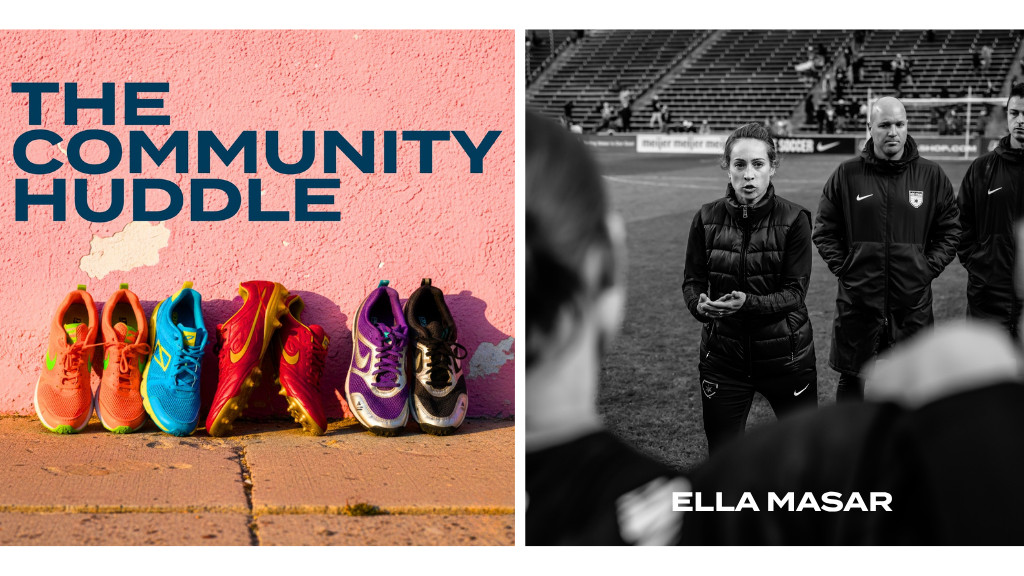
Ella Masar - Ella Masar on Resilience, Representation, and Rising Up
From an underrated walk-on to the Big 10 Offensive Player of the Year, Ella Masar’s career has never been about taking the easy road. She has laced up her boots in eight different countries, playing for some of the biggest global powerhouse clubs on the planet, including PSG and Wolfsburg. But Ella's true legacy goes far beyond the trophies and the pitch. Today, she is a high-level coach shaping the next generation of football talent, and a fearless advocate who famously risked her own career to stand up for player safety and integrity when others stayed silent. Candid, unfiltered, and deeply respected, Ella joins us to talk about resilience, the reality of modern football, and what it truly means to define your own path.
What makes a good brand book?
Sed viverra ipsum nunc aliquet bibendum enim facilisis gravida. Diam phasellus vestibulum lorem sed risus ultricies. Magna sit amet purus gravida quis blandit. Arcu cursus vitae congue mauris. Nunc mattis enim ut tellus elementum sagittis vitae et leo. Semper risus in hendrerit gravida rutrum quisque non. At urna condimentum mattis pellentesque id nibh tortor. A erat nam at lectus urna duis convallis convallis tellus. Sit amet mauris commodo quis imperdiet massa. Vitae congue eu consequat ac felis.
- Lorem ipsum dolor sit amet consectetur hendrerit gravida rutrum.
- A erat nam at lectus urna duis convallis convallis tellus.
- Arcu cursus vitae congue mauris mattis enim ut tellus elementum sagittis vitae et leo.
- Magna sit amet purus gravida quis blandit cursus congue mauris mattis enim.
How to create a good brand book?
Vestibulum lorem sed risus ultricies. Magna sit amet purus gravida quis blandit. Arcu cursus vitae congue mauris. Nunc mattis enim ut tellus elementum sagittis vitae et leo. Semper risus in hendrerit gravida rutrum quisque non.

Important elements of a good design brand book
Eget aliquet nibh praesent tristique magna sit amet purus. Consequat id porta nibh venenatis cras sed felis. Nisl rhoncus mattis rhoncus urna neque viverra justo nec. Habitant morbi tristique senectus et netus et malesuada fames ac. Et tortor consequat id porta nibh venenatis cras sed felis. Fringilla est ullamcorper eget nulla facilisi. Mi sit amet mauris commodo quis. Eget arcu dictum varius duis at consectetur lorem.Venenatis cras sed felis eget velit
- Magna eget est lorem ipsum dolor.
- Enim lobortis scelerisque fermentum dui. Fringilla ut morbi tincidunt augue.
- Nascetur ridiculus mus mauris vitae.
- Egestas sed tempus urna et pharetra pharetra massa massa ultricies.
What brand book references can I use?
Mattis molestie a iaculis at. Volutpat est velit egestas dui id. Suspendisse potenti nullam ac tortor vitae purus faucibus. Aliquet nibh praesent tristique magna sit amet purus gravida. Volutpat blandit aliquam etiam erat velit scelerisque in dictum. Potenti nullam ac tortor vitae purus faucibus ornare suspendisse sed. Aliquet bibendum enim facilisis gravida neque convallis. Malesuada nunc vel risus commodo viverra maecenas. Varius sit amet mattis vulputate enim.
“Arcu cursus vitae congue mauris mattis enim ut tellus elementum sagittis vitae et leo nullam ac tortor”
A brand book can always keep evolving
Egestas quis feugiat urna, tincidunt ut sem sit in ipsum ullamcorper etiam varius turpis tincidunt potenti amet id vel, massa purus arcu lectus scelerisque quisque velit cursus et tortor vel viverra iaculis ornare feugiat ut cursus feugiat est massa, blandit quam vulputate facilisis arcu neque volutpat libero sollicitudin sed ac cursus nulla in dui imperdiet eu non massa pretium at pulvinar tortor sollicitudin et convallis senectus turpis massa bibendum ornare commodo eu scelerisque tristique justo porttitor elit morbi scelerisque facilisis
Check out Ella Masar's SportsShare Channel today!
Join SportsShare for FREE today to access the full interview.
[00:00:00]
AlanSchuler: today'sguest is someone who defines the word resilience. She didn't just play thegame, she fought and continues to fight for her place in it.
From a walk on to University of Illinois', big 10 offensiveplayer of the year, to playing in eight different countries for some of thebiggest clubs on the planet, including Paris Saint-Germain, Wolfsburg, theChicago Stars, et cetera, to diving into coaching, uh, at the highest levels.Her impact goes far beyond her playing days on the pitch to become a high levelcoach who is shaping next generation of talent, and perhaps most importantly,as a woman who stood up when others stayed silent, famously risking her owncareer to advocate for player safety and integrity.
She's candid, she's unfiltered, and she's one of the mostrespected minds in sport. [00:01:00] We areexcited that she's joined Sports Share Community and excited to have her jointhe Community Huddle today. Welcome the incredible Ella Masar.
Ella: Alan. Iappreciate it. I'm gonna actually just cut that and on a bad day I am gonnaplay that back 'cause that was a very, very wonderful introduction.
AlanSchuler: Pleasedo. So just diving in, Ella? Um, yeah, who's Ella? Uh, just in a few words,maybe describe who you are. How did you get to be set in front of this screentoday? Um, I know that's an open-ended question, but, uh, give your best shotof describing who you are in the world of football, who you are as a person,and, and, yeah, let's dive in.
Ella: a person? Um, Ithink that's such a, like you said, it's an open question because if you wouldask me every three years, I think that would've changed maybe every year. Um,now, currently in 2026, I am [00:02:00] amother of two and a half kids. There's six months pregnant, uh, with our thirdboy. Um, I'm living in Germany, so I'm an expat. And I'm trying to figure outthis new transition in my life from being a interim head coach of NWSL team tostarting my pro license, which, this is the utmost, this is the highest levelthat you can get in a month's time and navigate being a mother. Um, how I gotwith SportsShare share, that is the beauty of the football world. Um, 15, no,even more than that now. 16, 17 years ago, I found myself in British Columbia,in off season and woman named Heather Moffat\, uh, took me under wing and letme train her and, and brought me into the coaching world there in, in Ambleside in Canada. And then fast forward to now just reaching out and seeing whatyou guys are about, the community that you're trying to reach and how you'rereally trying to help the soccer world.
Everything that aligns with what you want and how you wannabuild this to help the [00:03:00] community,um, is why I started playing this game in the first place. And that is. Along-winded short answer of, of why we are sitting here today looking at eachother across worlds and across countries and across three different time zoneor maybe four at this point.
AlanSchuler: Fantastic. Um, on the Ella front, uh, you'resitting in Germany today and, and, and I've come to learn that. You've ended uppicking up languages 'cause you grew up in the US and uh, I presume weren'tstudying languages in school, but here you are and, and, and what fortitude youmust have had to learn languages to get what you wanted to get done.
Done.
Ella: for the time period that I played footballbecause as you know, you played hockey and internationally. wasn't for themoney, it was for these culture experiences of one and a half, two yearcontracts. And it [00:04:00] always took me, guess I always believed thatto understand a culture you have to understand the language.
So my first year wouldbe trying to understand. the second year, as you said, I'm un candid,unfiltered in ways I just started to speak and I don't think about grammar,unfortunately even probably in English. Um, and I just started to learn thatbecause that's what I thought, cultivated friendships that last a lifetime. Iwas lucky that I played in eight countries, as you stated before. And so nowSpanish is okay, Swedish, I can get by in Germany I never thought I would livehere, um, or my wife would be from here. But the same time I did my UEFAlicense in Swedish. Gonna do my pro in English, but I hopefully I will beworking in Germany.
So that's just thebeautiful world of football paying you back.
AlanSchuler: Yeah. Yeah. It's, it's exceptional and, uh,yeah, interesting that you would approach it from that perspective [00:05:00] and,and quite correctly. Yeah, I, I felt the same thing. It, it was the best way tointegrate and, and get a feel for the culture, even if you were there for oneseason or two. Um, I also heard that you're a pianist.
Is that true? And howdid you ever have time to do this? Is there any other fun facts about Ella weshould know
Ella: that you
AlanSchuler: alongthe way?
Ella: You know, I, I remember fighting my momtooth and nail growing up that I had to sit down and do an hour of piano two orthree times a month, a week. , But now I'm so thankful that that is actuallyprobably one of the only things that when I sit down and play. I don't thinkabout anything and actually clears my head. Um, and so every country I lived inand piano has somehow found a way to come with me. Now kids obviously changesit because you just don't have time, to think. But I think that is such a hobbythat showed me, okay, hey is such a different part of football, but when I sithere, I'm not a footballer.
I'm not thinking aboutthe play or what's going on or [00:06:00]the pressures around me. I justget to get lost to the music. Um, and that was something that was so thankful.And a hidden fact is actually with my ex-wife who is Canadian. Uh, we have aspot, a song on Spotify that is from a documentary in Sweden.
Long story short, and wehave over 400,000 listens to it.
We were a groupcalled
AlanSchuler: Wow.
Ella: which is my, my ex name. Erin McLeod is myex-wife, and she's wonderful. There's. discretion there. Um, and we had to sitdown in Sweden when we played there together and they had this huge UEFA TeamChampions League documentary on us.
And I would sit thereand play the piano. And everybody that knows Erin, um, has an incredible voiceand she sang. so if you look on Spotify, we have the song that we came up withlyrics, we came up with melody, we came up everything. and I have so much respectfor musicians now. It's, it's a lot of work, but it was an incredible time.
And something I, knockoff my, my bucket list.[00:07:00]
AlanSchuler: Wow.
Ella: Yeah.
AlanSchuler: Fantastic. Yeah. Oh, and, uh, yeah. So manymore questions around it. We'll keep going.
Ella: segment. Thatcould be phase two, you know.
AlanSchuler: Yeah, yeah. Um, I'm, I'm interested for youto discuss more about. Navigating, uh, the football landscape as a mother and,and you're, you're two and a half kids into this and, and, uh, and so what didthat mean for you and where did that intersect you being a player,transitioning to coach and, and, and I'm sure there's, uh, you know, so manyother women that would, that are aspirational or, or gonna end up in that spacein their, in the journey of their football careers that they're gonna have to [00:08:00] dealwith that, uh, dynamic as well.
So, uh, yeah. How, howhas that shaped your journey in football? And is that, um, is that environmentchanging? Is it being better respected by the playing landscape or the coachinglandscape?
Ella: 2026 to 2019, when I retired, the footballlandscape of being a mother, whether you are a player or a coach, hasdrastically changed for the better. Um, in 2019, when I retired, I was 33. Iknew I had to retire one, I was with a woman. So you have extra tests, you haveIVF and all that kind of stuff.
But I knew I didn't havetime and I knew I wanted more than one kid. was no getting pregnant and comingback to playing. And then all of a sudden you have players like Alex Morgancoming into it and setting the precedent saying No, I'm going to have thischild and I'm gonna come back and play.
And in the NWSL, to befair, that's probably one of the best leagues in the world that [00:09:00] supportsand cares for mothers. I mean, the rules there and regulations, it's incrediblenow to push forward to being a mom and a coach. I think Emma Hayes said it onceis, I don't probably wish it on anyone. Um, but in the same way I have chosenthat to do this, to inspire my sons and I love this sport and I want to giveback to the sport everything that it gave to me and more than I could haveimagined. Um, it's important for them to see a balance. I don't know if you canbe ahead and do it. I was that for a little bit and I think the time managementis very hard 'cause you. It's just such a small chunk of time that they reallyrely on you, you know, the different phases more than I do. but I think if youcan find a manage and you have a partner that can be your support rock as yourkids are, I think it is something today that because of the help and 'cause ofsupport and 'cause of women's football getting bigger and more financiallystable, it is possible.
And that, to me is soexciting and we have to say thank you to all the people that did it [00:10:00] beforeus because did it with a lot less and they paved the way for us to be heretoday.
AlanSchuler: So tell us about, uh, yeah, how would youdefine how you were as a player and, and, and how were you as a young playerand how has, how did the, the way you decided to play the game transition?
Maybe it did, maybe itdidn't, uh, but yeah, I'm super curious how you would think about yourself as aplayer.
Ella: Ooh, how I would think myself as a player. Ithink stubborn in a hothead would be the first word for many. Um, I mean, I gotin trouble for yelling at refs. I always say I was defending my teammates, butlooking back, I probably was a little bit. More crass and quick fired. Um, Ithink my family would also say the [00:11:00]same.
I was a really stubbornkid, but I also think that without that stubbornness and that belief thecompetitive spirit, I mean, I'm the youngest of, or I'm the third youngest ofthree of four and I have a twin sister, so it gets a little bit who got pulled first.Um, I think without that, that I could never have had the career that I didbecause my brother would, you know, gang up on, beat me up and I'd always haveto try to catch up to amaze my older brother and that went into playing incollege and, oh, my dogs in the background, sorry. Um, that would go intocollege. And then from college, you know, being a walk-on, I knew I had thatbelief in my corner, but I was stubborn. I think if I wasn't stubborn then Iwould never have been able to actually keep fighting, believing until my junioryear where I actually made something of myself and then did that transpire tome to be a coach? People would say, I'm passionate. You know, I would saypassionate, good and bad. But I also think that women have this [00:12:00] perceptionthat we're short-tempered and we're quick to fuse and that kind of stuff. And Iremember my first year as a pro coach, one of the assistant coaches in themen's game came up to me and he goes, Hey, people say women are emotional inthis game, but let me tell you, the men in this league are the most emotionalones. And that has always stuck and resonated with me.
AlanSchuler: Hmm.
I think I was telling you about, uh, Amy Walsh.
Ella: I mean,
AlanSchuler: Do youknow Amy?
Ella: You know thename.
AlanSchuler: Yeah,she, uh, she's part of our team and in a, in a, in a better scenario, she'dactually be the one doing this with you 'cause you guys would end up having somuch el so much other context around the discussion. So,
um,
she. No, she has a, she's involved in, in two differentpodcasts. One of them is called the Broadcast.
[00:13:00] Uh, so it's allabout women in, in football and uh, uh, and then she's also part of FootyPrime, which is, uh, one of the predominant, um, um, podcast in Canada forfootball. And then she's been a big part of the NSL and getting the league upand running. And she lives in Montreal, so she's, she's had a little bit moreto do with the Roses, um, as well as the league.
But yeah.
Ella: me, it's
AlanSchuler: Um,
Ella: the NSL.
AlanSchuler: I don'tknow.
Ella: It's just, it'sso hard to now, there's so much different talent and so many different levels.It's hard to know how that's going to look in a couple years.
AlanSchuler: Yeah when you were a player, um, and you'rein a high pressure moment where you have multiple passing options, whatspecific cues in the defender's body language help you decide whether to take ashot or find a [00:14:00] teammate?
So that's quitetactical, but, uh, but curious about how you thought about that as a player, orif you did, or if it was just innate and, uh,
Ella: about how I would
AlanSchuler: Yeah.
Ella: or one V one and see the weaknesses of them.Um, I think it's so hard to answer in my player mind because now I'm a coach,but I would like to think that, and what I actually would've given myself, orwhich I, I know that I tell myself now is that I always had this chip on myshoulder. That's why I thought, you know, again, I was recruited, walk on, I'mnot making it. And then you make national team and then you go into the fullteam camp. And what I tell my players now is I wish I would've just believed thatI belonged because I think the chip on my shoulder actually always hurt me. Sofor example, a little detail of that one V one situation. I truly believed inmyself as a player, even though I was at the top level, I played for the topclubs, I was, I earned my style, the US national team who's top in the world, Iwould [00:15:00] want the ball, I would desire the ball. And everytime it would come to me, I would trust all my preparation for that moment toget ready and know I can know what to do next. Um, and I don't think I everreached that capacity of belief in my own career, if that makes sense. Um, butI think
AlanSchuler: Interesting.
Ella: video analyst now, how you can break downthe stats is incredible. Um, the game is so far advanced than what it was, um,and you can really structure one V one and, and different technical movements.So I, for me, it's, I wish I would've trusted myself more. And then two,because you're doing these 10 hour, 10,000 hours of training, if you're aprofessional, just kind of instinct and the best players in the world, you donot want to hinder or break away from that instinct because that's why you gotwhere you are in the first place.
AlanSchuler: Yeah, exactly. Interesting. Um, so you'vehad this amazing journey that [00:16:00]keeps going on and on and on infootball and, and I can't imagine it won't be a lifetime. Um, if you think backto relationships, um, um. Curious about how you feel about relationships and,and whether they were other players or coaches, mentors, and, um, and how didthat sort of help you navigate through sport?
And then how do youthink about it now, now that you're a bit more on the mentor side or the coachside?
Ella: and relationships gave me who I am today. Imean, I, again, these eight countries, I have my six best friends, one'sIcelandic, uh, I have my friends I went to college with. Her two are Canadiannow. And then I have a Dane, I have a Norwegian. My wife is German and English.Like without those relationships, would never have been able to make it here.what I think hurts us now in the women's [00:17:00]game is that the relationshipbetween the coach and player is so different. I give a an example as we at RealMadrid because my wife played there. Carlos an was there they talked about howwhen he came there he would go to the men's house and he would meet his wifeand he'd meet his kids and he'd sit down and they'd have a dinner and theywould get to really know each other because that's how you know these players.think in the women's game now, it's a little bit different, but you don't meetmany young women that have kids or a family and been some relationships broken,at least in the state, that I don't take you out for coffee. I don't learnabout your family. I don't think that you're someone's daughter or you'resomeone's sister or you're someone's partner.
And I think the closerwe can get to that relationship and back to that and more harmonious that as acoach, I just want what's best for you. though we make hard decisions. I thinkthat is probably what's missing the most in the women's game right now.[00:18:00]
AlanSchuler: What, what role, um, or what is mentoringin, in football and and whatrole do you think that sort of, um, character plays or, or, or do you think
Ella: Mentoring. I think mentoring football ishuge, but
AlanSchuler: I joined.
Ella: it's, so hard to understand that the personsitting across to you as a coach is actually in the professional game. Forexample, I want what's best for you in college. You have four years to developthis player. You know that they're there now.
It's so different withthe NIL understand that, but I,I hope that the pro game is the same. I, I take you under my wing and even ifyou have a year or two year contract, my goal, regardless if you're my 11 ornot, is to create and make you a better player and a better human. And that hasalways been my philosophy as coach, because that's how I wanted to be as aplayer.
And I miss that from myplaying days that when I walk into locker [00:19:00]rooms, I feel that support,recognition from staff, players, but we spend so much time together. It shouldbe like a family. And I think you'll know when you're in the right when youhave that family feeling and that's hard to find and it's hard to create.
AlanSchuler: Yeah. Um. So much going on with the changeof, uh, the landscape, particularly in, in the women's game, um, the pace andathleticism of women's soccer there, it's also rapidly evolving. It's maybehaving sat as a player and now as a coach where, talk about how you feel aboutthe advancement of, of the actual skills of the game and the pace of the game.
And, um, yeah, it kindof seems like sky's the limit, but how, how do you feel about it [00:20:00] nowfrom your perspective?
Ella: as the analysts. You know, we always joke,we wish my age group five years younger. One, I would make a, I would've made alot more money. But two, you have to have the question, would I've had thecareer because I was somewhat athletic, would I have the career that I didbecause of how much the game and how much even five years later, howathletically, strong and fast and fit these women are. I got, um, I was luckyenough to go in with the US national team in April this year, and I remembersitting there, of course we played against some NWSL, you had some of theseplayers coming back from Europe and just to see the. Detail of the, thetraining. You know, you go into nutrition now, you had someone wear that, awoman there that just works with when they're on their time and when they'renot on their time. And the communication between the clubs and the catapultknowing, okay, this is how far she ran. This is her high distance, this is herspeed, this is what she did in the last game. This is what she needs forrecovery. [00:21:00] And the individual programs, I mean, thesewomen are really being able to say you have two to $5 million put into justthat part of making them a better athlete. Just in that. And that filters downnow to the NWSL and other things that I know how fast you run, where you run,how I can help you. You have all the physical testing. I just think it's, we'restill far behind the men's game, but I think I could never imagine that we'vecome this far since the time I retired to where we are today.
For sure.
AlanSchuler: Awesome. And, and even though that gap'sclosed significantly, you do still see a gap in resources that are placedaround the men's game, um, at this point, yeah.
Ella: I mean, you're still probably 30, 40 yearsahead of us and money alone, right? I mean, we always joke if would've playedin [00:22:00] Champions League final, played for my national team, and thenplayed in two other Champions League teams and played 10 year professional, I'dhave my island down in Majorca Youknow, and we don't have that yet, but I'm thankful for the time because maybe Iwouldn't have learned the languages then. Um, now you've seen, you know, CatMacario is just coming back toNWSL $8 million contract. We'refinally, finally getting there. It's
AlanSchuler: Yeah.
Ella: now the rest of the world, like in Germany,they don't have a league minimum. So they don't, some players are already stillmaking a thousand, so it's just about the whole world catching up compared totop three or four countries in the world.
AlanSchuler: Yeah. At this point, what, how do you lookat new leagues and the value of new leagues, like, like the NSL, and what roleis it playing in, in leveling the playing field or, [00:23:00] uh,sort of minimizing those gaps?
Ella: have so much respect for the end of N NSLI think everybody's rooting for,we call it the baby sister. Maybe Canadians don't wanna hear that. to me, Ithink they have a stronger backbone and they've been in the game, you know,Vancouver, white caps, they've always been there, regardless if it was aprofessional time.
Can Canada is getting,continue to improve and improve and improve. You wanna see where it's like theMLS where you have a Vancouver white caps that can come over and play. And Ithink hopefully with them creating like Diana Matheson behind it, I mean, Iplayed with Diana and so many Canadians, um, in Norway, and she's such abrilliant young woman. So the right people are in charge here. You know,they've seen coming in Erin this, thisage group that came in to know they've come from nothing, to actually createsomething that's worthwhile. It's incredible. Um, you just hope that thefinances stay and the demographics of Canada, which makes it very hard [00:24:00] becausegoing to Vancouver to Halifax is three time zones and what, seven, eight hourflight. And so that's, that is what you worry about as a human for the love ofthe game. But I hope that they continue to drive that. They say, okay, you wantto go to Portland, but let's see what Vancouver is, because that means thewomen's game is advancing the way it should be.
AlanSchuler: Um, now that you're on the sidelines. Whatis one thing you did as a player that you now realize was actually a secretweapon for your coaches?
Ella: that's a good question.
AlanSchuler: Did you ever consider yourself a secretweapon?
Ella: Did I ever consider myself a secret ratherplaying? I believe that I always knew that I brought energy and passion. I wasne I never once took what I did for granted, [00:25:00]I believed that I deserved to bethere. I remember getting so tense, almost puking before games. I was sonervous. But then as soon as the ball started and it was kicked and I was like,it went blank.
And he just had thisenjoyment of the game. Um, and I think that is probably what I was probablyremembered for the most. I remember a coach from Chicago came up to me after Iplayed and he goes. know, we miss players like you in the locker room trying tohold the standard, keep the standard. I wasn't the best, but I tried to keepeveryone equal.
Whether you made $6,000or your Carly Lloyd playing in a, in a hat trick, you just scored a hat trickin the World Cup final. And everybody ties their shoes the same way. And that'swhat my father taught me, and that's what I tried to upheld in the locker room,because you need that cohesiveness, especially in women's football.
AlanSchuler: You said there were, there were times inyour career that you felt invisible. [00:26:00]How do you mitigate that feelingfor women you coach today? Is that a thing? And, and how do you, as now as acoach, how do you help manage that?
Ella: I to be invisible in women's football, Ifeel like that means as a coach that you failed. Um, maybe that's harsh wordsor, or hard words, but. The reason I wanted to coach is because I got to liveout every phase of a superstar to a bench player, to being invisible. And itwas the hardest moments of my career.
And it's actually whatalso made me retire because I was heartbroken. The, the, the game broke myheart, as many as it does many players. but my promise to myself was, I wouldtry to say whether you're the 24th player or my big superstar you your role andthat you're important. And I don't know if I've always succeeded at that, butwe had, you know, in Chicago's 17-year-old kid come and train with us.
And then she ended up [00:27:00] signing.And I never looked at Mikayla Johnsondifferent than Mouse Swanson, was our superstar. hope that they felt that justas simple as, Hey, how you do and how's life that can carry as far as let's sitdown and watch film and how we can break that down. Because sometimes youforget that these are humans as well.
AlanSchuler: Um, you say the human leads, the team, notthe team leads the human. What do you mean by that?
Ella: more to women's football because who I don'treally know how it would feel if I was a man and sitting and making $2 million.You know? Excuse me. I don't know if that would change my mindset, but I thinkfootball is such a binomial. I did a master's in tactical period periodization,in football, the individual cannot survive without the collective, and thecollective cannot survive without the individual. They cannot be separated. AndI think we [00:28:00] forget, especially in the women's game, thatyou are human first. So if I don't know how you're doing and what's going on athome and how I can help you as a human, because we all learn different, we alltake in information differently, then how can I possibly get the best out ofyou as a player? I've learned that in camp in, in Chicago, we were the bottomof the table. We had great players, we had great coaches there before me. Butwhat I really did was I just tried to remember who, who they were. So I wouldtake the best players, team from 24 to one, and I just had the people thatbelieved the most send in one minute video of why they're great and none ofthose girls and everybody watched it.
So fiances, moms,sisters, brothers, it didn't matter who it was in this minute, everybody got tohear why this player was great, this human. And I can tell you out of that 24minutes that we watched [00:29:00] so rare of it was, oh, you're, you can kicka ball or you have a great first touch or you run really far behind.
And that is what I wishwhen I was a pro it. You are human first and you are a player. Second,
AlanSchuler: Fantastic. Um. How do you, now you're acoach, how do you think about improvement as a coach and, and, and what areasof coaching are you strongest in? And are you, so, and what would you beworking on developing? What's, what's next on your, in your journey ofcoaching?
Ella: that, if you break that question into threeparts, the first part of trying to improve as a coach, think in America we'reso scared of feedback because we take it so personally and you know, my wife isGerman, so feedback is not something [00:30:00]you, it, you're given it, you'renot asked for it, you know, you know, you understand. Um, and I've learned somuch from her from direct feedback. At first. was like, wait, you can't saythat to me. And now I appreciate these moments because I know what she reallymeans and when she says it, um, I think how and where I can improve as a coach.Patience. Patience. trusting the process, trusting the journey, um, andunderstanding the balance of what I want to choose as a mother, and a ProCoach.know I wanna be a ProCoach, but trusting how I get there and, and theexperiences that I've had. And the last part of the question was so I remembercorrectly. Um, what do I improve better and what am I great as a coach? Uh, Ithink from my playing experience, I think when you go from a player to a coach,you forget so quickly what it was [00:31:00]like to be a player. Becausethere's so many things that you'd never understand as a player. The time forwhat makes a training session periodization in football, the staff members thatyou, I mean, we had a staff of 24 people, 25 people in Chicago, navigatingthat, understanding their humans. And then extra 25 players that are justplayers that you have to manage. Um, I think to
AlanSchuler: Yeah.
Ella: humans, I'm really, I feel like I'm good atthat 'cause I have empathy, but at the same time, you can never stop developingyourself and the people around you and allowing them to get the best out of thestructure and the framework that you need. And that is incredibly hard. And youknow, I mean, you're, you've started
AlanSchuler: Yeah.
Ella: you've been in the entrepreneurial world.You like have created these gifts that come from what you know and you wannacreate. And I think it's. understand in football now why when I do a headcoaching job, I have to bring someone [00:32:00]with me that I trust. And it'snot because they're the best coach, it's just because I know that they will bethe best for me and they'll hold me accountable, that's in the good and the badtimes. to find and create that staff, that is the journey of the next level ofmany players' careers.
AlanSchuler: So, so now can you, and again, it's, you aregonna have a lifetime at this, but if you looked at, at your coaching styletoday, how would people think about that? Or how would you like people to thinkabout your coaching style today?
Ella: I would, I would first say humbled. I'vemade mistakes and I hope I've learned from those mistakes. I will always makemistakes. It's in, it's in, it's impossible not to, but I hope I learned fromthem instead of just 'em behind me. and I'm sorry for the people that you hurtalong the way or that you didn'tget it right.
Um, I would say that I'm[00:33:00] stern, but I'm fair or I hope so. I try to the emotion out of itas hard as it's been and try to look at the whole picture, even if that doesn'tnecessarily coincide with what my emotional side would bring out of thesituation. Um, and I don't think anybody beats hard work. I don't care ifthere's always different dynamics in football and there's different ways youhave to handle players, but I think everybody has to fight for the same reasonand understand that the name in the front is more important than the name onthe back. And I believe in that more than anything. And then if you don't fitin, I'd rather take two and three people that believe in that than the personthat disrupts it.
AlanSchuler: Um, mindset and mental toughness. How, howhas your definition of success changed from when you were a 20-year-old player [00:34:00] tonow, uh, being a coach that's managed the mindsets of an entire roster? So youkind of spoke to that, but, uh, where does mental toughness and success fit inthe middle of, of the, of that?
Ella: lessons through mental toughness and I thinkin success is understanding who are you doing it for and why. I think we livein such a social world that it's the Instagram or the tiktoks that you show upand they say, I have this, or I've done this. as you get older and more in thisbusiness, you realize that people are very one-sided and minded.
And they might not meanto do it on purpose, but you are probably the first person to throw under thebus. I think the reason of understanding, okay, perfect example. We could havestayed in Chicago, my wife and I, they did so many things to try to make usstay and to be a part of this. And instead we chose to come here because it wasthe next step for my wife and believed [00:35:00]that it would work out for me toget into the pro license.
'cause we didn't know ifthat would happen and for maybe me to take a step back now. But it's because webelieve in our little group of people and in our family and what they will andhow they can change this game that we knew that this might be a step back forone, a step forward, but it doesn't matter because we are together and. Peoplecould say it's the wrong decision, but it it's the people that are in the roomthat you call on the darkest day. It's not just when year at the glory. Andthat's been a hard lesson to learn.
AlanSchuler: Recently there's been a FIFA mandate thatthere must be at least two female staff members per club at senior women'scompetitions. What, what's your feeling about that? That's current news. Uh,maybe you know something about. You've known about that longer, but is it, it,it feels current, [00:36:00] and what does that mean to you and what doesthat mean about, I guess, closing this, this gap any further?
Ella: answer to two females being in the firstteam staffer a part of it, I think it might be con controversial because in away, I think why? Why does it have to be mandated when I know of so manyincredible women that deserve this chance? Um, that's number one. Number two isthe reality of women do not get the same chance as men.
They don't get thischance. And because of the mothers or whatever staying home, whatever thehierarchy or however it's been in history, it's, it's harder for women to getin and it's harder. It's why most men courses or professional coaches, I'm sureI'm gonna have two women, maybe three if that the rest will be men. So for me,I'm so happy that it's there. I have so much respect for FIFA for actuallyimplementing that. Um, question is why now? Probably, [00:37:00] andit's an incredible thing, but at the same time, it just shows where the gamereally is and how far we still have to go.
AlanSchuler: Yeah. Um, so it's fantastic you've decidedto join sports here. Um. How are you thinking about creating resources tosupport up and coming players and, and coaches? So you've had this uniquejourney in football and now a growing list of coaching credentials. Um, so whatare your thoughts around best ways to share all that intellectual propertyaround football and, and, uh, where are you leaning in?
Ella: share and trying to create what I want myplatform to be, I guess in a way, um, my intellectual framework, which you soeloquently said, um, [00:38:00] it's, for me it's because my process isnarrowed down now. It's a process of 10 years of playing football and some ofthe games and the drills that I've taken with me and I've learned throughcompetition and for me, how important competition is, how important it is thatat least three days a week players feel like they have a chance to earn theirright for the next weekend. And how actually that doesn't exist very often. Um,that to me is important from my playing career. And now it's just, okay, I'vebeen a coach now. I mean, I coached the whole time I was playing, but now tolike really be able to narrow in from doing my licenses, from doing my mastersand to actually putting that into work, I hope I can help show players one, howimportant it's to believe in 'em and work on their craft, but also work on yourweakness, but makes you work on your weakness.
So what you're great atdoesn't go away. You have to find this really small grace over lining of doingboth. And then for coaches is. I don't [00:39:00]have any emotion in, in what'sgoing on. And sometimes it just helps to have a consultant or someone come inand say, Hey, I do understand dynamics. I can sit back and watch this is how Ican help.
What's your problem? Howcan I help you? How do you feel? What are the stats saying? What is youactually feeling compared to what the stats, because it's such a statisticalgame now. And then how can I help? And that's what I think, or I hope to bringto the table because lived at, I've been there and I wish somebody would'vedone it for me.
AlanSchuler: Um, does the statement pay it forward,
Ella: Absolutely
AlanSchuler: with you?
Ella: it forward. Is is something that I know Iwouldn't be here without it, whether somebody helped me indirectly or not. Um,so many people have done so much for me that they wouldn't have given me achance, an opportunity, and I hope I've never forgotten to say thank you.[00:40:00]
AlanSchuler: You, you were telling us the other day aboutsome local kids. Uh, tell us about that and what a great, um, description ofpaying it forward. There's no monetary gain. It's you with your knowledge andpassion. Anyways, tell us about that.
Ella: being over here, you know, paying it forwardto these kids. And I think the first week we were here, there's this littleplayground that has the two rubber courts with two, metal or iron goals on it.And my belly wasn't so big then from the pregnancy, so they asked Babett and meand my little 2-year-old or my five-year-old son to play. And they didn't knowthat they were playing against the ex captain of Real Madrid and someone that,you know, dabbled in the pro game as well. And we just started playing. And tobe [00:41:00] fair, I don't think my wife has kicked a ball since she retired.So for me it was also just to see this enjoyment on her face and to have fun.
And then long story short, it's taken a long, longer time thanI thought to get into the game here, just because the pregnancy and the kids,and she's a sporting director. But I just, I've always loved being on thegrass. My wife, she wants to be a sport director. She wants to change the gamefrom the inside out.
And I want thecommunication. I want that relationships. I want to be able to say, how can Ihelp you today? Because that's what football allowed me to do. And then thesetwo little boys, we've been training, we go once every two weeks on a Sundayand Ishma and Leon and they need. And I bought some cones and I have threeballs here of Nike balls that we've been given and. To see the joy in justtrying to help them. It's why you started in the first place and somebody gaveme that chance way back then, I don't know if it's gonna help them or not, butyou can tell. One comes from a harder background. [00:42:00] He'sescaping a lot, and for this moment he just seems to be a kid. And I hopesomebody would do that from my own sons now.
So it's just, I miss, I, I love kicking the ball. So for me, Istill get in, I get to play a little bit and, and have that joy. And at thesame time I know I'm helping them a little bit more as they're helping me.
AlanSchuler:Fantastic. Um, one of the local clubs that's joined Sports Share is,
Ella: Mm-hmm.
AlanSchuler: Kelowna,uh, Okanagan United. Football club and it, and it's being led by Lee Tregonningand Lee has, yeah. And so Lee has got a a lot of respect for you and he isposed a question. So yeah. What key experiences or challenges in your careerhave most shaped your approach to developing young players, and how [00:43:00] can coaches best apply those lessons intoday's game?
Ella: a goodquestion. I would say my, from my own setbacks, how it's allowed me to become abetter coach for my own playing, um, is again, trying not to forget thosetrials and tribulations that I did from playing and remember them compared towhere I am now, coach. 'cause a coach gives you different stipulations. andagain, I think the biggest one is to be kinder to yourself and to believe inyourself. when I look at my coaching or my playing career, unfortunately I lostmy father when I was 25. And when I was 25, I was playing at PSG, one of thebiggest clubs and I get a phone call and uh, they found him unfortunately had aheart attack and I had to go home for a week.
And at this point in my career, it was a really defining momentbecause you're playing for one of the biggest clubs at this time. Um, and thenyou go home and you see your family who's just lost this [00:44:00] huge piece of the puzzle. Now, I chose togo back and finish that year of my contract, and I knew every time I put onthose shoes, I was that moment with my father. And when I went home in thesummer and I saw how drastically things have changed and dynamics, I knew I hadto walk away from that contract. And I never knew if I would get another chanceto play European football or Champions League or anything like that. But I think the biggest thing I've learnedfrom that is that you have this gut instinct no matter where you are, whatyou're doing, and you have to listen to it. And that will always lead you inthe right direction, and that will always get you through the trials. And ifyou know, if you're low in a moment, whatever that is, eventually you will comeout of it. I think that is what football has taught me. That's what I don'twant to forget. And then it's also meeting that person where they are, whereverthey are on their journey. I'm not sure if I answered the question, but
AlanSchuler:Fantastic. Yeah. So at, [00:45:00] in,in the context of applying, uh, what you learned as a player to how can coachesbest apply those lessons in today's game?
Um, yeah, trusting yourgut, um, even though it might not be as mature as yours as far as tenure in thegame, that it's still got a bunch, it is still got value.
Ella: think it's so important whether you are aplayer or coach to trust your gut. It's that feeling when you meet someone, youshake their hand. It's that instant feeling. And in coaching, when you onlyhave 11 players play however many minutes and you have a team of 24, and thenyou're trying to think about parents, if you start to go down that path, youwill never make everyone happy. Never. So I think that's something that'salways resonated with me is that when I make a decision, one, it's communicationto explain why I made that decision to the player. And then number two is saying, okay, I trustthis decision and if I don't, and if I play a game and it doesn't work out. [00:46:00] humbleenough to go to that player and say, Hey, sorry I made a mistake. And that iswhen I say, when you're dealing with individuals and emotions, you never knowhow, even if this player has five days of the best trains of their life, hitfive, upper 90 goals. You never know what happens in the night before the game.You never know what they show up in the morning, and maybe that first 45minutes, they can't even kick the ball from me to you. And that's the humanaspect of the game. And why I think we all love football in the same way, isbecause you have to learn from your mistakes and you're putting humans into it.So you have to know the human before the player.
AlanSchuler: Awesome.So last question. What, what does the future look like for Ella?
Ella: What does thefuture look like for Ella? I say this with the most belief in my heart. I wantto play for a trophy. I want to win a trophy. And I say [00:47:00] play, I guess I should say I want a coach for a trophy.we always have this discussion and again, I bring my wife a lot, but you know,we have this award room here and I know I've talked to you about this.
And she has 2016 gold medal from Germany, 2008 bronze medal.She has, um, a European championship. She won the Bundesliga League of 15 timestotal with a cup eight and eight. what else? She's won the World Cup one time.And then I have like my player, the game plaque and we've had this discussionof whose career was better. And she's like, yeah, but you can speak fourlanguages and you know, you've traveled the world and you have such thisculture and you have this understanding and you're this. And she goes, I'm justGerman. And I'm like, yeah, I would've taken one. You know, then of my career,I got a couple, but I would've just taken one big with my country represented.Um, and that's why [00:48:00] now it's not thereason that drives me, but I've, I remember when I retired, and I don't knowwhy, but I remember I was sitting on a podium. I had a trophy in my hand and Inever got that as a player. I never got to with stripes on a jersey. I nevergot that. And for whatever reason, I believe that will happen.
I believe in that journey, and I believe through the hard workand the journey that I've had so far, that is what I'm working for and that'swhat I am pushing for. That's what I'm trying to understand and navigate.That's why I'm doing the license and I, that's what I want as a coach to winit. And I want to show my boys and I want them to be there, but at the sametime, I will not let the game break my heart like it did as a player. So if Ifeel like one morning I wake up and I'm chasing trophies. More that I'mactually chasing, trying to make these women or men better human beings, then Iknow that I'm not in the game for the right reasons. So I guess that's, that'stwofold because the trophies [00:49:00] don'tdrive getting up or going 6:00 AM or trying to make a call or checking in howpeople are doing.
That's not what drives you. ask me what I want, I want all thishard work of believing the people that I have to prove. That is why I can earnand win a trophy.
AlanSchuler: Perfect.Thank you, Ella. It's been a pleasure.
Ella: Thank you Alan.Okay.
AlanSchuler: Okay.
Ella: cia. Bye.

About the author


SportsShare community insights direct to your inbox
Subscribe to our monthly newsletter for the latest updates, community stories, and exclusive offers. Join a community that celebrates and supports sports just like you.

.jpg)